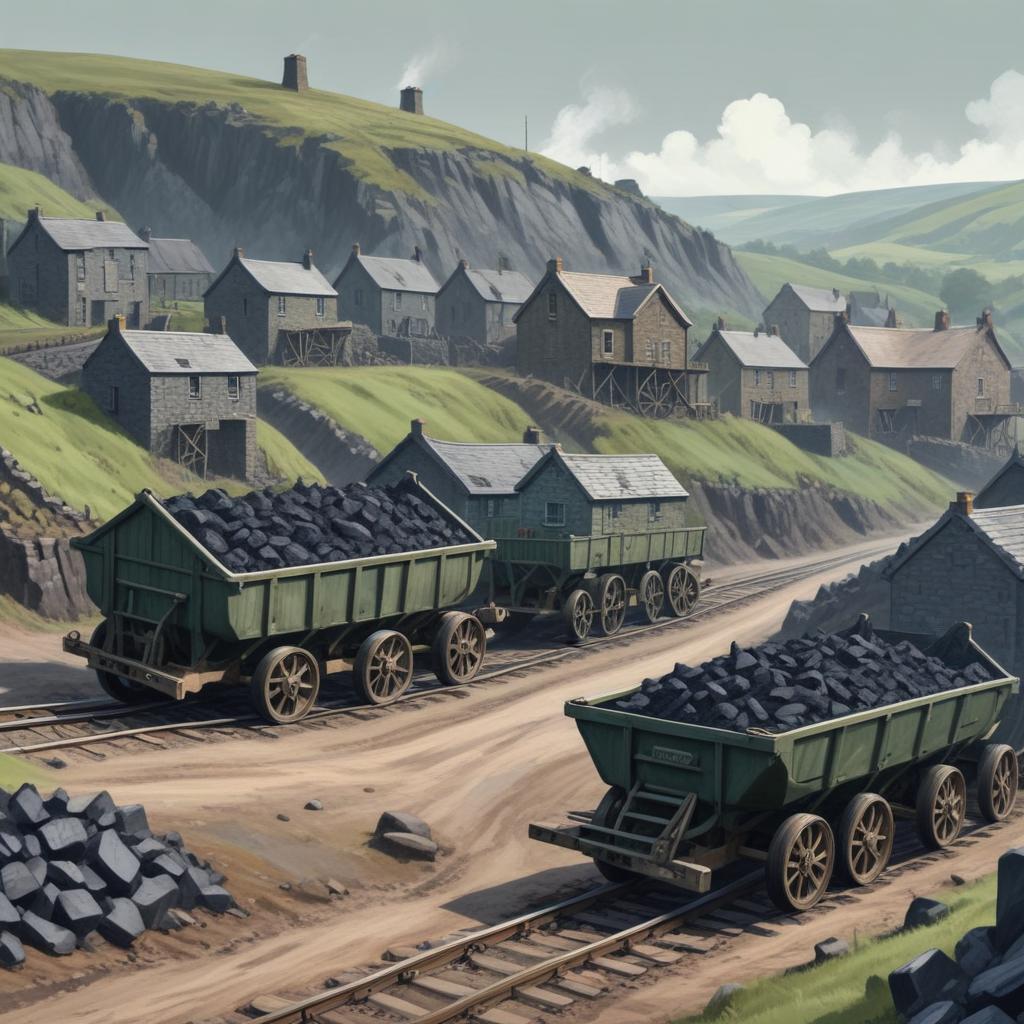
Historical background of Welsh mining communities
The development of Welsh mining communities is deeply intertwined with the rise of coal mining during the Industrial Revolution. This period marked a profound transformation in the economic and social landscape of industrial Wales, where vast coal deposits fueled not only the nation’s economy but also shaped its communities and culture. Welsh mining towns and villages emerged around coal mines, attracting workers from rural areas and beyond, creating closely-knit communities built on shared labor and solidarity.
Coal mining history in Wales is distinguished by its scale and significance. From the early 19th century onwards, expansive mining operations were established primarily in the South Wales Valleys. These areas became the heartland of Welsh mining, providing crucial resources that powered factories, ships, and railways both nationally and internationally. The industry’s growth led to a surge in population in these communities, necessitating the development of housing, schools, chapels, and social institutions which served to reinforce the cultural identity and unity of the Welsh communities.
Welsh mining communities were marked by a unique blend of harsh working conditions and strong communal ties. The shared experiences of mining life fostered a culture of mutual support, collectivism, and resilience. Trade unions gained prominence, advocating for miners’ rights and better working conditions, further strengthening the social fabric of these communities. Beyond their economic contribution, these mining communities had a profound social impact on industrial Wales, shaping traditions, language, and a spirit of solidarity that extended beyond the coalfields.
Overall, Welsh mining communities played a crucial role in the industrial history of Wales. Their significance extends beyond the extraction of coal to embody the social and economic transformations of the region. They helped forge a distinct community identity, contributing to the cultural heritage of industrial Wales and influencing various aspects of life, including sports such as boxing, which often thrived in these working-class environments. The legacy of Welsh mining is thus both a story of economic development and a testament to the strength of community bonds rooted in shared industry.
Socio-economic conditions in mining towns
Mining towns in Wales were predominantly working-class communities that faced significant economic challenges. The harsh realities of coal mining meant long hours in dangerous conditions, which placed immense physical and financial strain on miners and their families. The income was often unstable, dependent on the fluctuating demand for coal and periodic strikes, which exacerbated the economic hardships faced by the community.
Despite these difficulties, the social life in mining towns was strongly shaped by community cohesion. The shared experiences of labor and struggle fostered a deep bond among residents. Families supported each other, with communal events and local clubs playing a central role in strengthening ties. This solidarity contributed to a resilient working-class identity, where collective welfare often took precedence over individual hardships.
The economic challenges, combined with a tightly knit social fabric, influenced many aspects of life in mining towns. From housing conditions to education and leisure, the community’s collective spirit helped them endure tough times. In many ways, this unity within mining towns created an environment where boxing thrived, offering a source of pride and escape for the working-class population.
Cultural identity and community spirit
The mining culture in Wales played a crucial role in shaping a unique Welsh identity, deeply rooted in the daily lives and struggles of the mining communities. These communities were not just centers of work but hubs of cultural expression where traditions, language, and values were preserved and passed down through generations. The harsh conditions of mining forged a collective spirit of resilience and pride, which became emblematic of Welsh identity.
Community spirit thrived in these mining towns as miners and their families depended on each other for support and survival. This solidarity extended beyond the workplace into social and cultural activities, strengthening bonds and fostering a sense of belonging. Events, gatherings, and competitions, including boxing matches, were occasions where the community could come together, celebrate their shared heritage, and reinforce their collective spirit.
The mining culture instilled values of hard work, loyalty, and mutual aid, which permeated every aspect of community life. This environment nurtured a strong sense of solidarity, where individuals identified not only with their profession but also with the collective identity of the Welsh mining community. Such deep-rooted connections helped sustain cultural pride and ensured the resilience of Welsh traditions amid changing social and economic landscapes.
Role of mining communities in shaping Welsh boxing
The mining communities of Wales have had a profound influence on the development and popularity of Welsh boxing. Rooted deeply in the working-class culture, these communities fostered a robust environment where boxing could thrive as both a sport and a tradition. The rigorous physical demands of mining life, combined with the close-knit social fabric of the communities, created ideal conditions for boxing to emerge as a popular pastime and a symbol of resilience and strength.
Mining towns were characterized by a strong sense of solidarity and mutual support, where hardships were often shared and overcome collectively. In this context, boxing was more than just a sport; it was a form of expression that mirrored the toughness and determination required in mining work. Many young miners took up boxing not only as a means of physical fitness but as a route to personal achievement and social mobility within their communities.
The traditions of Welsh boxing were shaped by the gritty reality of working-class life. Gyms and boxing clubs were often located near mining areas, making the sport accessible to a wide audience. These clubs served as important social hubs where miners and their families would gather, fostering a sense of pride and local identity. The influence of mining also contributed to a style of boxing that was noted for its toughness, stamina, and technical skill—qualities honed underground and brought into the ring.
Moreover, Welsh boxing under the influence of mining communities became a vehicle for storytelling and cultural expression. Fighters were seen as heroes who represented the hopes and struggles of their people. As the sport grew, it became embedded in the local culture, celebrated in pubs, social events, and local media. This close relationship between boxing and mining life ensured that the sport remained popular and deeply cherished as a part of Welsh heritage.
In conclusion, the mining influence on Welsh boxing is undeniable. The physical and social environment of mining communities helped shape boxing into a working-class sport rich in tradition and cultural significance. The legacy of these communities continues to inform the sport, maintaining its status as a symbol of Welsh identity and pride.
Boxing as a working-class pastime
Boxing became a prominent pastime among miners and other working-class individuals in Welsh mining towns largely due to its accessibility and cultural resonance. As a working-class sport, it required minimal equipment and space, making it a practical form of recreation for miners who faced long, grueling hours underground. The physicality and discipline of boxing mirrored the toughness and resilience demanded by mining work, creating an intrinsic connection between the sport and the mining community.
The popularity of boxing in these communities was also bolstered by the sport’s potential to offer a path to recognition and financial improvement. Many young miners saw boxing as more than recreation; it was an opportunity to escape the hardships of their daily lives and achieve local hero status. Boxing matches were social events that brought communities together, fostering a sense of pride and unity among spectators and participants alike.
Additionally, boxing provided a rare outlet for healthy competition and physical expression in an environment often marked by economic struggle. The sport’s emphasis on skill, endurance, and strategy appealed to the working-class ethos, further embedding it in the fabric of Welsh mining towns. The close relationship between miners and boxing thus reflected broader themes of recreation, identity, and solidarity within these communities.
Notable boxers from mining backgrounds
Welsh boxers have a rich legacy deeply intertwined with the mining heritage of their communities. Many famous fighters who emerged from the coalfields carried not only the grit and determination forged in the mines but also a strong sense of pride representing their roots in the boxing ring. These boxing legends inspired generations, proving that the toughness cultivated underground could translate into success inside the squared circle.
One of the most iconic figures is Jimmy Wilde, often hailed as the “ghost with the hammer in his hand,” whose origins in Welsh mining towns influenced his relentless fighting spirit. His exceptional skill and power made him one of the first worldwide boxing legends from Wales, symbolizing the indomitable will of mining communities. Similarly, Tommy Farr, known as the “Tonypandy Terror,” rose from hard-working coal miners’ families to achieve international fame, embodying the resilience typical of Welsh boxers.
These fighters and many others helped cement Wales as a hotbed for boxing talent, closely linked to the mining background that shaped their approach to the sport. Their contributions have left a lasting legacy, not only in Welsh boxing history but also in the hearts of communities that saw in them a reflection of their own struggles and triumphs.
Community support and boxing clubs
Mining communities in Wales played a crucial role in the organisation and support of local boxing clubs and training centres. These communities, tightly knit by their shared work and lifestyle, recognised the value of boxing as both a sport and a means of fostering discipline, resilience, and camaraderie among young men. Mining towns often banded together to establish and maintain boxing clubs, which became central hubs of social activity and athletic development.
The support from miners themselves was indispensable. Many boxing clubs were funded through small contributions collected from workers and local businesses, demonstrating strong community support. Some miners took on roles as trainers and mentors, sharing their discipline from the mines and transferring it to boxing training sessions. This hands-on involvement helped keep boxing clubs active and thriving, creating a pipeline of skilled boxers who often went on to compete regionally and nationally.
Training centres were also a focus of collective effort, with locals volunteering to maintain facilities and provide equipment. The sense of pride in these venues fostered a supportive environment where young boxers could train diligently. Additionally, miner sponsorship was a common practice; prominent miners or mining companies sometimes provided financial backing or sponsored promising fighters, further cementing the relationship between these communities and their boxing clubs.
This enduring connection between mining communities and the sport of boxing helped shape not only the careers of individual fighters but also the cultural fabric of Welsh mining towns. The boxing clubs stood as a testament to community solidarity and the value placed on physical and moral strength within these hardworking, close-knit populations.
Legacy and contemporary influence of mining on Welsh boxing
The boxing legacy rooted in Welsh mining communities continues to hold profound significance in modern Welsh boxing, influencing not only the sport itself but also the cultural identity surrounding it. The mining tradition, with its values of resilience, camaraderie, and hard work, forms the backbone of this enduring legacy. Generations of boxers raised within these communities have drawn inspiration from the grit and determination characteristic of miners, a quality essential to the sport’s demanding nature.
Today, the cultural impact of mining on Welsh boxing is evident in the persistent popularity of boxing in former mining towns and the way it is celebrated as a symbol of local pride. Boxing clubs established in these areas have preserved the ethos of their mining heritage, emphasizing discipline and community support. These clubs serve as vital social hubs, helping to mold young talent while honoring the struggles faced by their ancestors. This connection to history fosters a unique fighting spirit that continues to define the modern Welsh boxing scene.
The mining tradition’s influence is also reflected in the stories and media surrounding Welsh boxing, where fighters are often portrayed as embodiments of the miners’ courage and fortitude. This narrative enhances the sport’s cultural relevance, making boxing more than just a competition—it becomes a tribute to the shared past and the collective identity of mining communities. Modern athletes celebrate this heritage by acknowledging the sacrifices and strength of those who labored underground, thereby bridging the gap between past and present.
Furthermore, the social and economic challenges once faced by mining communities have shaped boxing’s role as a pathway for personal and communal advancement. The sport offers opportunities for social mobility and recognition, mirroring the escape routes many sought from the harsh realities of mining life. Through mentorship programs and grassroots initiatives, modern Welsh boxing continues to nurture talent while embedding the cultural values of the mining tradition. This fusion ensures that the legacy of mining remains a vibrant and influential force within Welsh boxing today.
Enduring values and fighting spirit
The traditional values cultivated within Welsh mining communities—resilience, determination, and an unyielding fighting spirit—have left a lasting imprint on Welsh boxing culture. These values are not merely historical artifacts; they continue to shape the boxing mentality of athletes who come from or are inspired by these industrious communities. The harsh realities of mining life demanded toughness and perseverance, qualities that seamlessly translate into the boxing ring. Welsh boxers embody this enduring spirit, striving tirelessly against all odds and setbacks.
Community pride serves as another crucial pillar supporting this fighting spirit. Mining towns have always been tightly knit, with a shared identity grounded in hard work and mutual support. This pride fuels boxers’ motivation, as they do not only fight for personal glory but also to honor their roots and to uplift their communities. The sense of belonging and responsibility ingrained from these Welsh values nurtures a mindset of resilience, where overcoming physical and mental challenges is part of the culture.
As a result, Welsh boxing is more than a sport; it is a continuation of the legacy of mining communities. The resilience and fighting spirit that once powered the mines live on in the determination of Welsh boxers, connecting past and present. This fusion of cultural heritage and athletic excellence makes Welsh boxing unique and deeply respected, highlighting the profound influence of community values on the sport’s enduring appeal.
Influence on modern boxing training and promotion
Contemporary Welsh boxing training and promotional activities continue to draw heavily from the rich traditions of mining communities, embedding a strong sense of resilience, discipline, and camaraderie. The rigorous physical demands of mining work have influenced boxing training methods, inspiring a focus on endurance, strength, and mental toughness that remains central in Welsh gyms today. Trainers emphasize these qualities, reflecting the legacy of miners who balanced physically exhausting labor with boxing as both a competitive sport and a means of community pride.
Promotion in Welsh boxing today also mirrors the communal spirit found in mining towns, where events were not just sporting contests but social occasions that united communities. Modern promoters harness this heritage by fostering local engagement and celebrating shared histories, often highlighting stories of boxers with mining backgrounds to deepen emotional connections with fans. This community influence ensures that matches are more than competitions—they become celebrations of Welsh identity and collective strength.
Overall, the influence of mining communities on boxing training and promotion is unmistakable. Trainers build programs that emphasize the hard work and perseverance mined from these communities, while promoters create events steeped in local culture and pride. This melding of tradition and modern practice sustains Welsh boxing’s distinct character, ensuring that the sport remains a vibrant expression of community spirit and heritage.

Growing up in the valleys, the atmosphere of a local fight night has always felt like home to me. I spend my weekends travelling the length and breadth of Wales to catch amateur and professional bouts, documenting the grit and glory of our fighters.