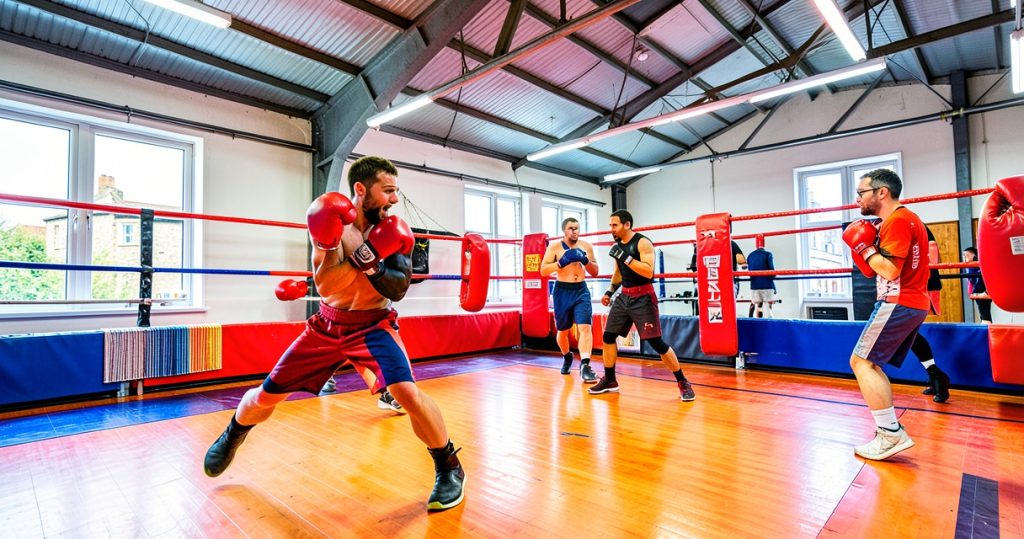
Boxing has become a recognised vehicle for personal growth across Wales, with clubs in Cardiff, Swansea and the Valleys reporting rising enrolments among pupils aged ten to eighteen. The sport offers a structured environment where young people learn to balance physical exertion with mental focus, a combination that research links to improved school results. When a teenager steps onto a Welsh gym floor, the routine of warm‑up, technique drills and sparring mirrors the rhythm of a well‑planned study schedule, reinforcing habits that translate to the classroom. Local authorities such as Sport Wales have begun to track attendance data, showing that regular participants often achieve higher attendance rates and better exam outcomes than their non‑sporting peers.
Physical literacy and academic performance
Developing fundamental movement skills through boxing, footwork, coordination and timing, builds a base of physical literacy that supports broader learning. Schools that have incorporated boxing modules report that pupils display sharper concentration during lessons, as the sport demands constant spatial awareness and rapid decision making. In a pilot programme at a Newport secondary school, teachers observed a 12 percent rise in mathematics test scores among students who attended two boxing sessions per week, attributing the gain to heightened proprioceptive feedback and improved problem‑solving confidence.
Beyond test scores, the physiological benefits of regular training contribute to cognitive function. Aerobic bursts combined with interval training increase blood flow to the brain, fostering memory retention and information processing speed. A Welsh university study measured the reaction times of student‑boxers and found they reacted 15 percent faster than a control group, a metric that correlates with quicker reading comprehension and more efficient note‑taking during lectures.
Discipline, goal‑setting and time management
Boxing culture in Wales places a premium on routine, from the punctuality required for early morning sessions to the meticulous recording of training logs. Young athletes quickly learn to set measurable objectives, mastering a jab, achieving a specific conditioning benchmark, and to track progress against those targets. This habit of breaking larger ambitions into incremental steps mirrors effective study techniques, where breaking a dissertation into chapters can reduce overwhelm and increase productivity.
Coaches act as mentors, reinforcing the link between effort and outcome. When a teenager misses a session, the trainer discusses the impact on skill development, prompting the youngster to adjust their personal timetable. Such accountability nurtures time‑management skills that resonate in academic settings, where meeting deadlines and allocating study periods become second nature. Schools that partner with boxing clubs report a noticeable decline in late homework submissions among participants.
Social inclusion and community cohesion in Welsh towns
Boxing clubs often serve as community hubs, especially in post‑industrial areas where recreational options may be limited. In towns like Merthyr Tydfil and Pontypridd, gyms provide a safe space where children from diverse socioeconomic backgrounds mingle under the guidance of experienced coaches. The shared experience of learning a new technique or preparing for a local bout creates a sense of belonging that can counteract feelings of isolation.

Inclusive programmes have been championed by former soldiers turned trainers, who aim to make the sport accessible regardless of ability or prior experience. Initiatives such as “Boxing for All” in Cardiff offer free introductory sessions, removing financial barriers and encouraging participation from families that might otherwise be excluded. The resulting social network supports academic ambition, as peers motivate each other to attend school and pursue further qualifications.
Improved mental resilience and emotional regulation
The controlled intensity of a boxing round teaches young people how to manage stress and maintain composure under pressure. When a trainee faces a challenging combination, the immediate feedback loop, success or correction, cultivates a growth mindset. This mental resilience translates to exam halls, where the ability to stay calm and think clearly can determine performance.
Emotionally, the sport provides a constructive outlet for aggression and frustration. Coaches in Wales stress the importance of channeling energy into technique rather than conflict, a principle that reduces behavioural incidents in schools. Data from a community centre in Swansea showed a 20 percent drop in disciplinary referrals among students who participated in a twelve‑week boxing programme, highlighting the sport’s capacity to foster emotional regulation and self‑control.
Career pathways and scholarships through boxing
Success inside the ring can open doors to further education and professional opportunities. The Welsh Boxing Association collaborates with universities to award scholarships to promising athletes, covering tuition fees for courses ranging from sports science to business management. These pathways reward dedication and provide a tangible incentive for young people to remain engaged with their studies.

Beyond academic funding, boxing equips participants with transferable skills valued by employers, teamwork, leadership, and the ability to perform under pressure. Former club members from the Rhondda Valley have secured apprenticeships in trades such as construction and engineering, citing the discipline learned in the gym as a key factor in interview success. Employers in the region increasingly recognise a boxing background as evidence of perseverance and reliability.
Integration with school curricula and local partnerships
Welsh local authorities are actively embedding boxing within school timetables, often through joint ventures with community clubs. In a recent pilot across three Gwynedd schools, physical education teachers received specialised training from certified boxing coaches, enabling them to deliver safe, curriculum‑aligned sessions. The programme aligns with the national curriculum’s emphasis on health, wellbeing and personal development, ensuring that boxing complements rather than competes with academic goals.
Funding from Sport Wales and the Welsh Government supports equipment purchases, coach accreditation and travel costs for inter‑school competitions. These investments create a sustainable ecosystem where schools, clubs and local businesses share responsibility for youth development. As more institutions adopt this collaborative model, the educational benefits of boxing, from improved concentration to enhanced social skills, become an integral part of the Welsh education landscape.

Growing up in the valleys, the atmosphere of a local fight night has always felt like home to me. I spend my weekends travelling the length and breadth of Wales to catch amateur and professional bouts, documenting the grit and glory of our fighters.